
Apparel Procure
Desktop Experience Recommended
Streamlining Enterprise Analytics: B2B Dashboard Design
These project case studies are optimized
for desktop viewing. Kindly open this page on a desktop for the best layout and readability.
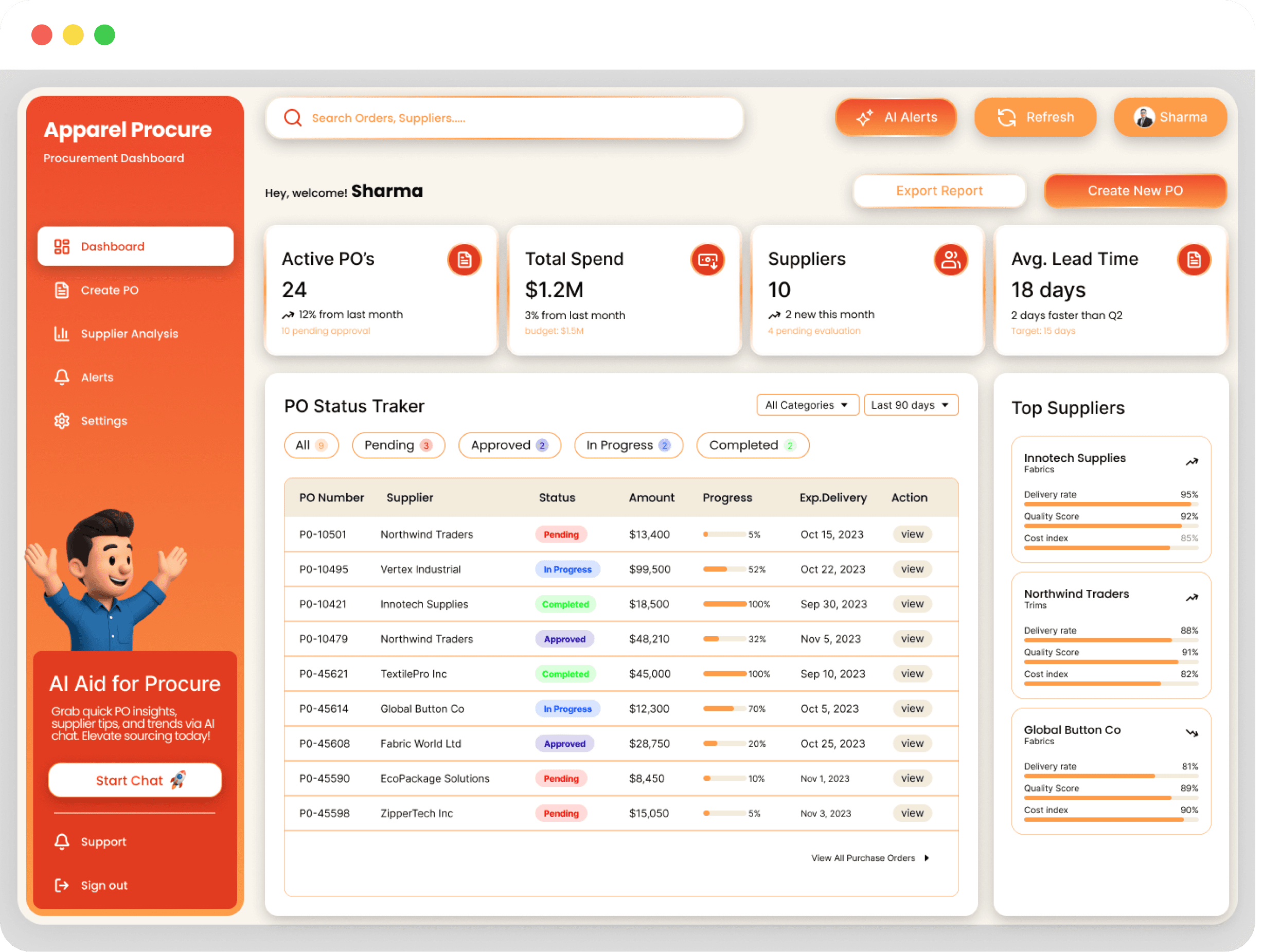

Procurement Dashboard
Procurement Dashboard
Procurement Dashboard
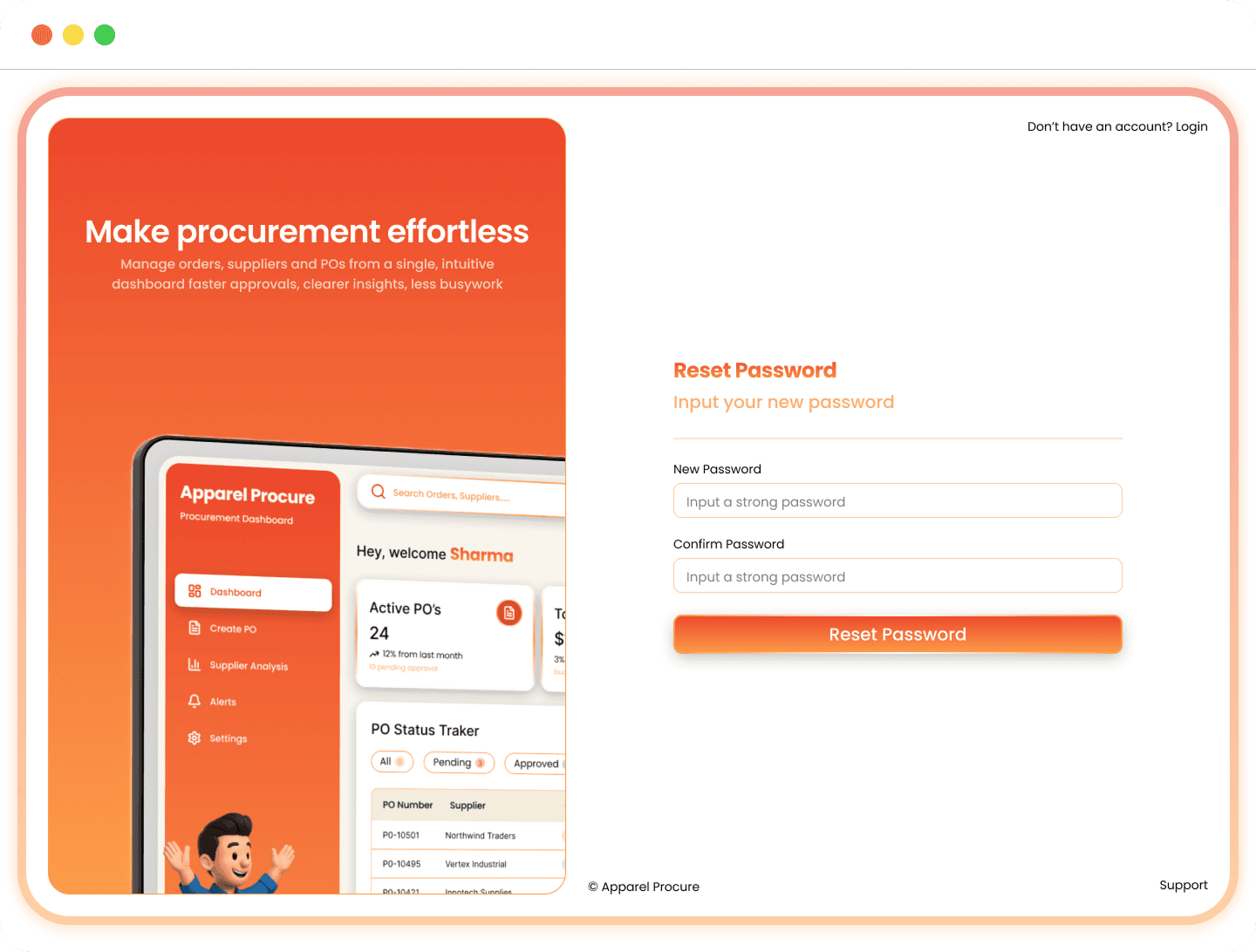
This portfolio project tackles real-world challenges in apparel B2B
procurement that I identified, such as 2-3 week approval delays and poor visibility causing overspend. It transforms these with an AI-driven dashboard designed for procurement manager's, streamlining sourcing and supplier management. Projected impacts include 30-50% reduction in decision time,
approval cycles cut to 5-7 days, 60% improved supplier coordination, and enhanced real-time cost tracking.
(Users are fictional but problems and solution are based on actual industry needs.)
INDUSTRY
Apparel procurement
YEAR
2025
ROLE
UX UI Designer
TEAM SIZE
Solo
DURATION
5 Weeks
Problem statement
Businesses in the apparel industry face big challenges in B2B procurement due to outdated systems and disconnected workflows that slow material sourcing, costing an estimated $100 billion yearly. Key issues include approval cycles averaging 2-3 weeks from email delays, 15-20% overspend from poor visibility, and production delays from inefficient supplier coordination with 40+ emails and 48-72 hour spreadsheet lags. These manual processes heighten risks like compliance errors and inventory mismatches amid seasonal demands. Sharma, a procurement manager, struggles with delayed POs and unclear supplier metrics, needing a better solution.
Proposed Solution
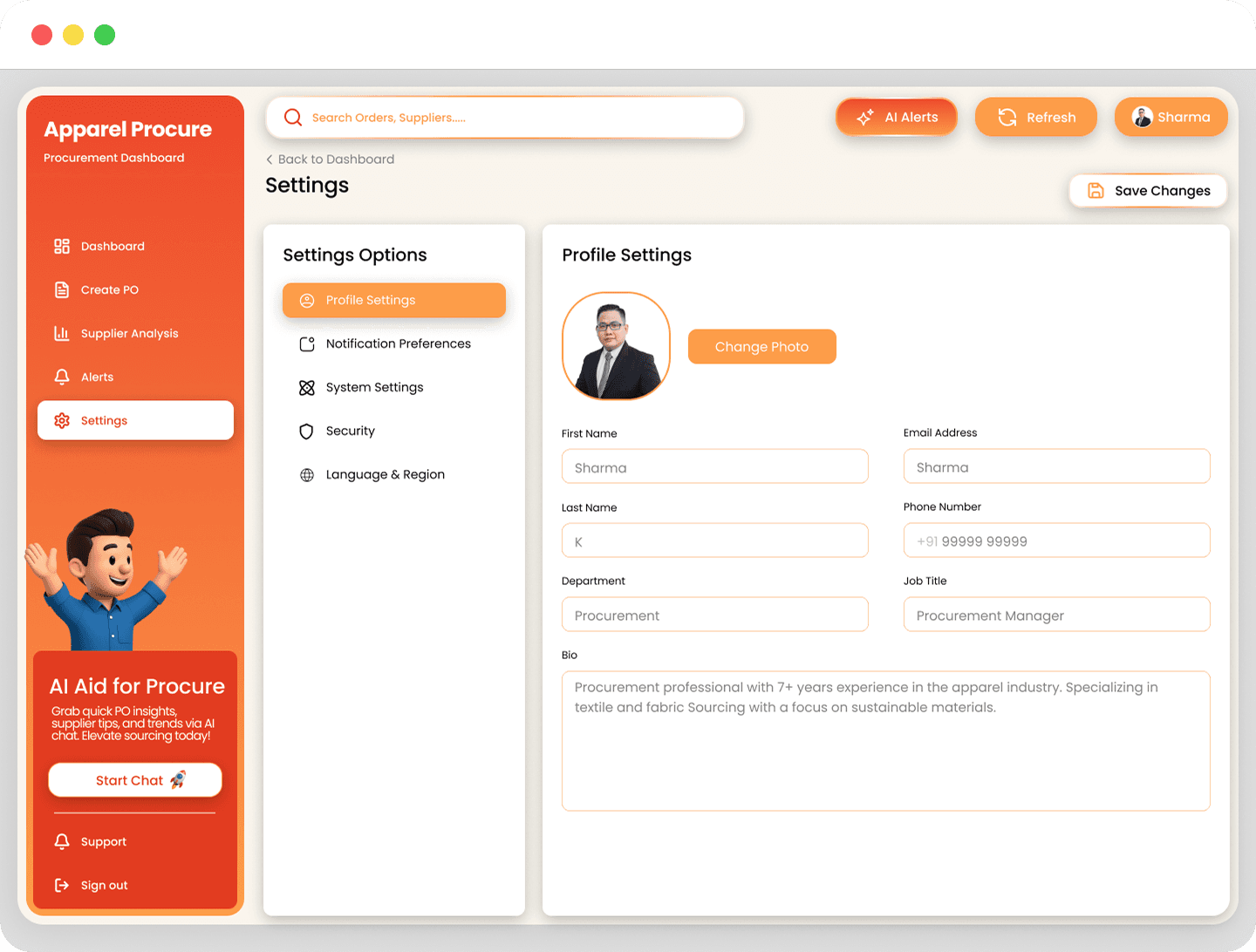
The solution transforms apparel procurement, moving Sharma from a cluttered world of emails and spreadsheets to a user-friendly dashboard solution. It provides live tracking for real-time updates, automated workflows for quicker approvals, clear charts for better decisions, and forecasts for seasonal planning. The dashboard offers spend visibility tools, supplier scorecards with sustainability details, automated approvals, and smart analytics, reducing decision times by 30-50%. This empowers managers like Sharma with reliable, efficient data, addressing real industry challenges
Research Approach
I explored apparel procurement challenges through a detailed research process. I used AI tools like Grok and Perplexity for deep research and to cross-check information from blogs, uncovering key insights. After gathering data, I analyzed the AI-generated findings, cross-referencing them with my own research to ensure accuracy and relevance. This approach included industry analysis of pain points, a competitive landscape review, and the development of Sharma’s user persona and journey map, all validated for a solid foundation
Key Insights
Email Delays Hurt
Rushed email processes cause 73% of procurement errors, slowing Sharma’s work
Too Many Tools
Companies use 7+ disconnected tools, complicating Sharma’s tracking
Seasonal Rush
89% of delays hit during peak times, challenging Sharma’s planning
Sustainability Matters
ESG metrics are key for supplier choices, influencing Sharma’s decisions
Persona, Journey Mapping & Flow
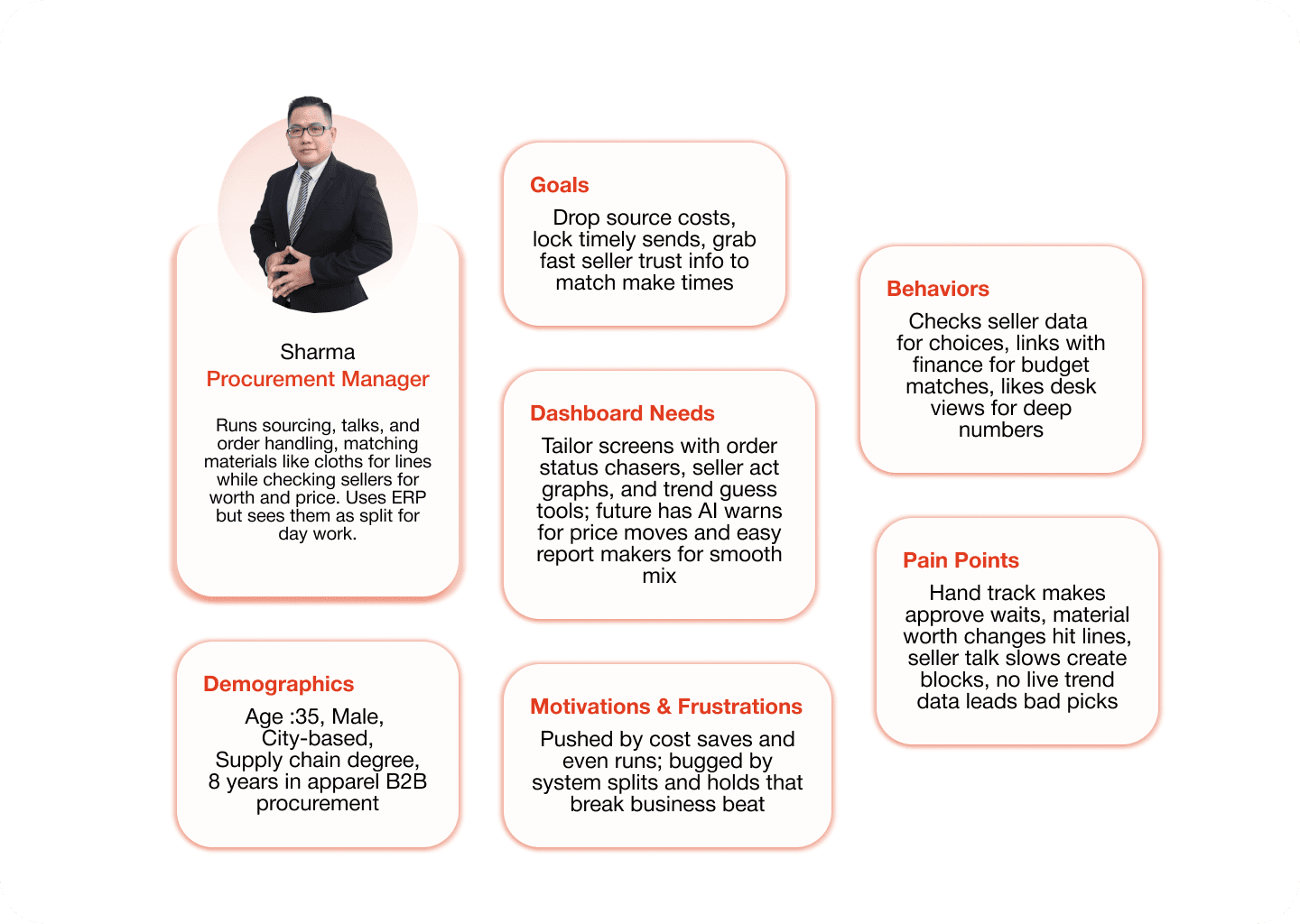
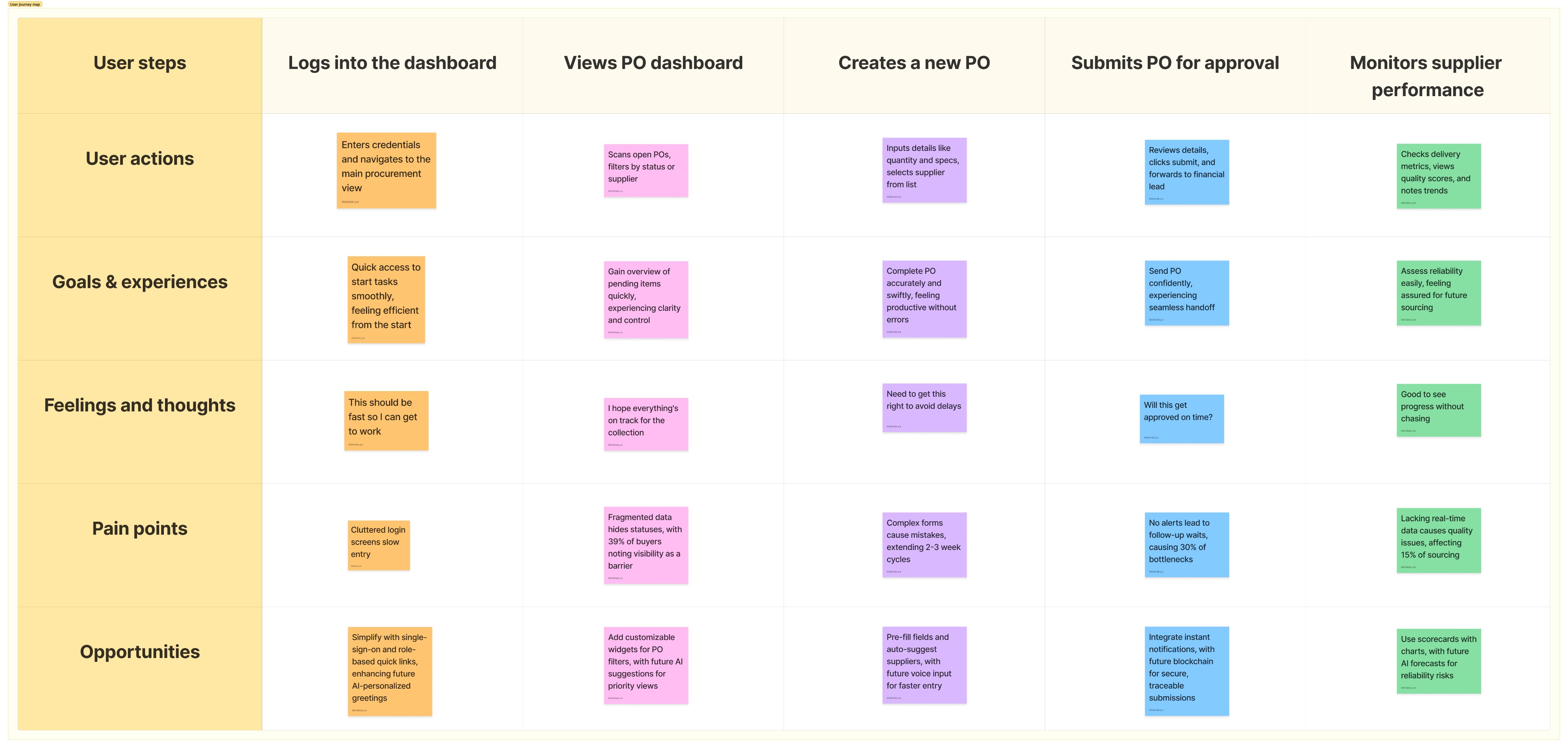
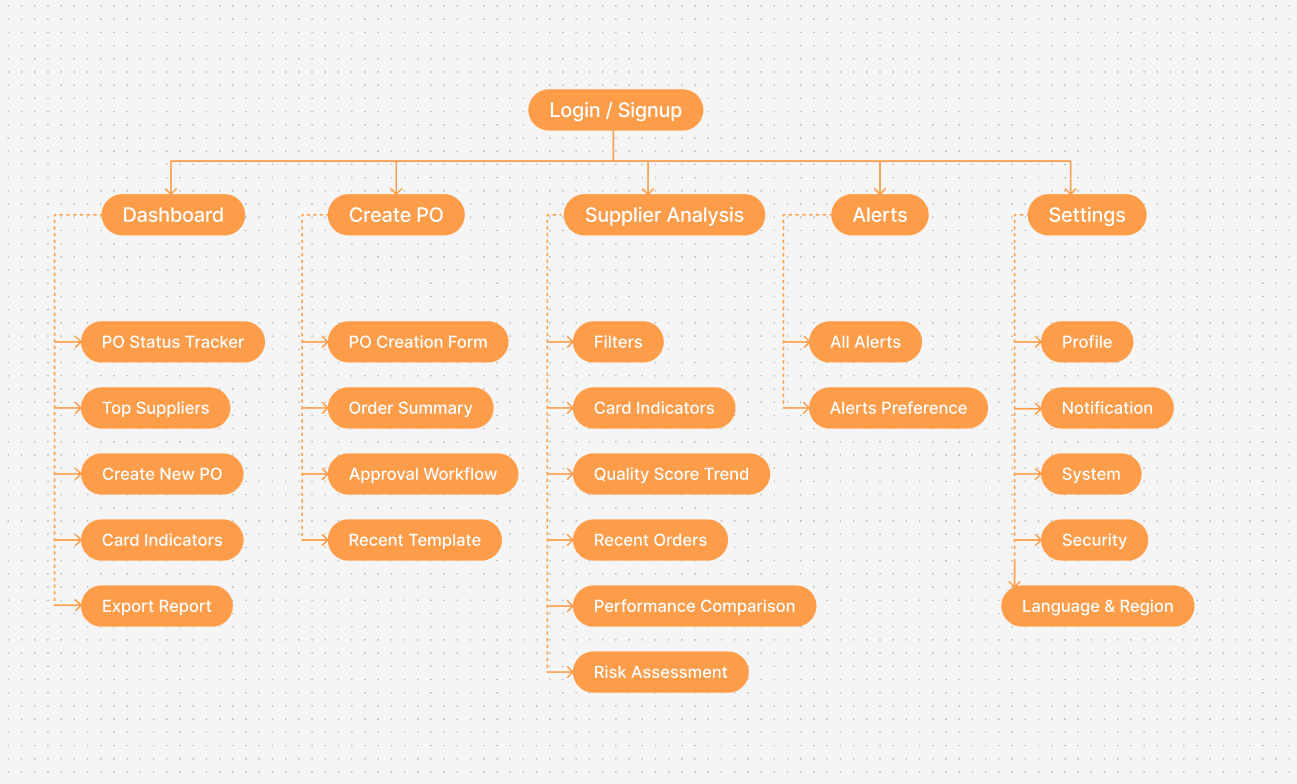
The wireframes started with some quick sketches on paper, laying out the dashboard’s basic look to tackle
user procurement hassles. Those rough ideas got a digital makeover in Figma, putting key spots like PO status and supplier info
front and center for easy access. As things moved along, the designs grew from simple outlines into polished low-fidelity
layouts, smoothing out navigation and data spots to make the user’s workflow a breeze
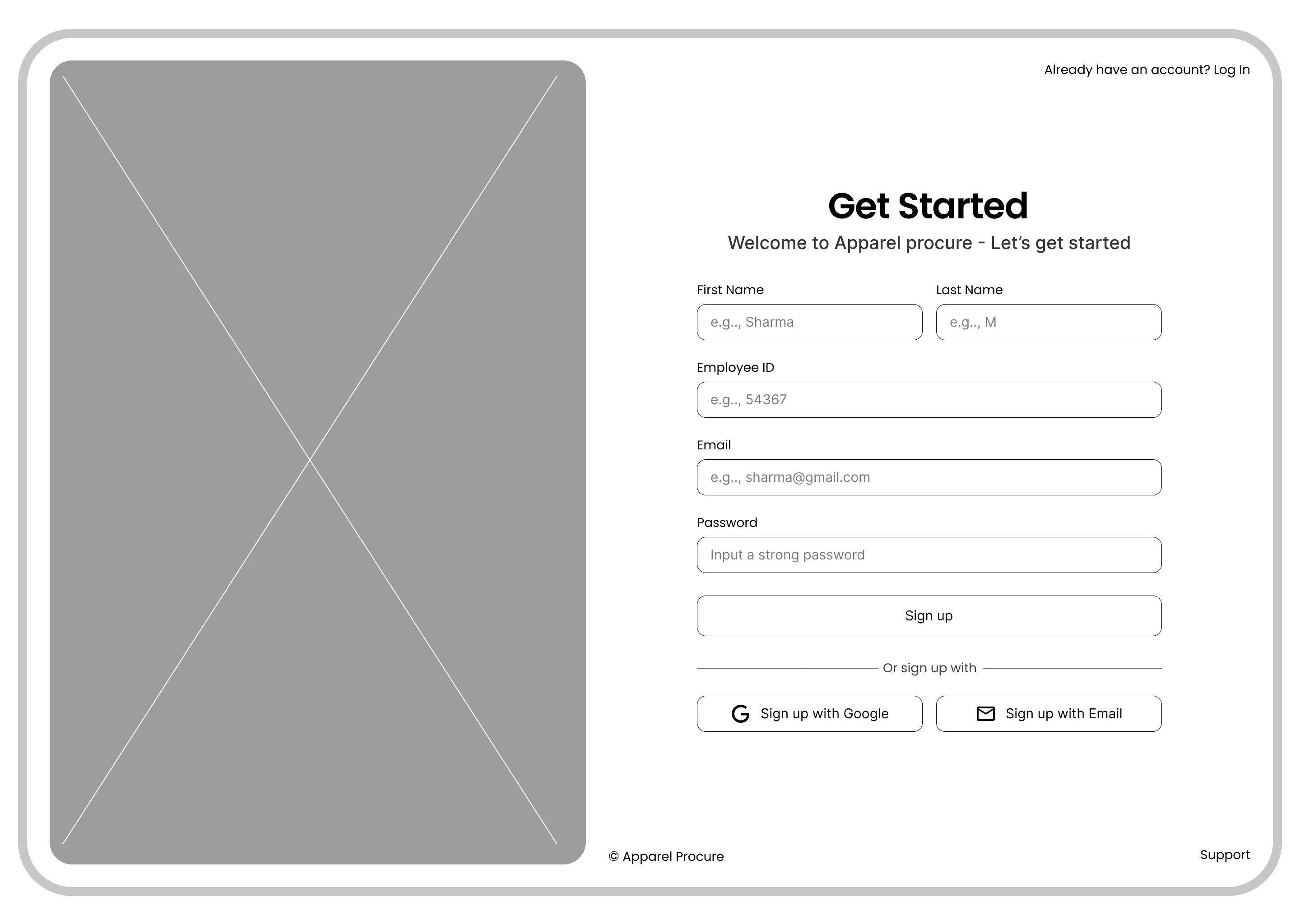
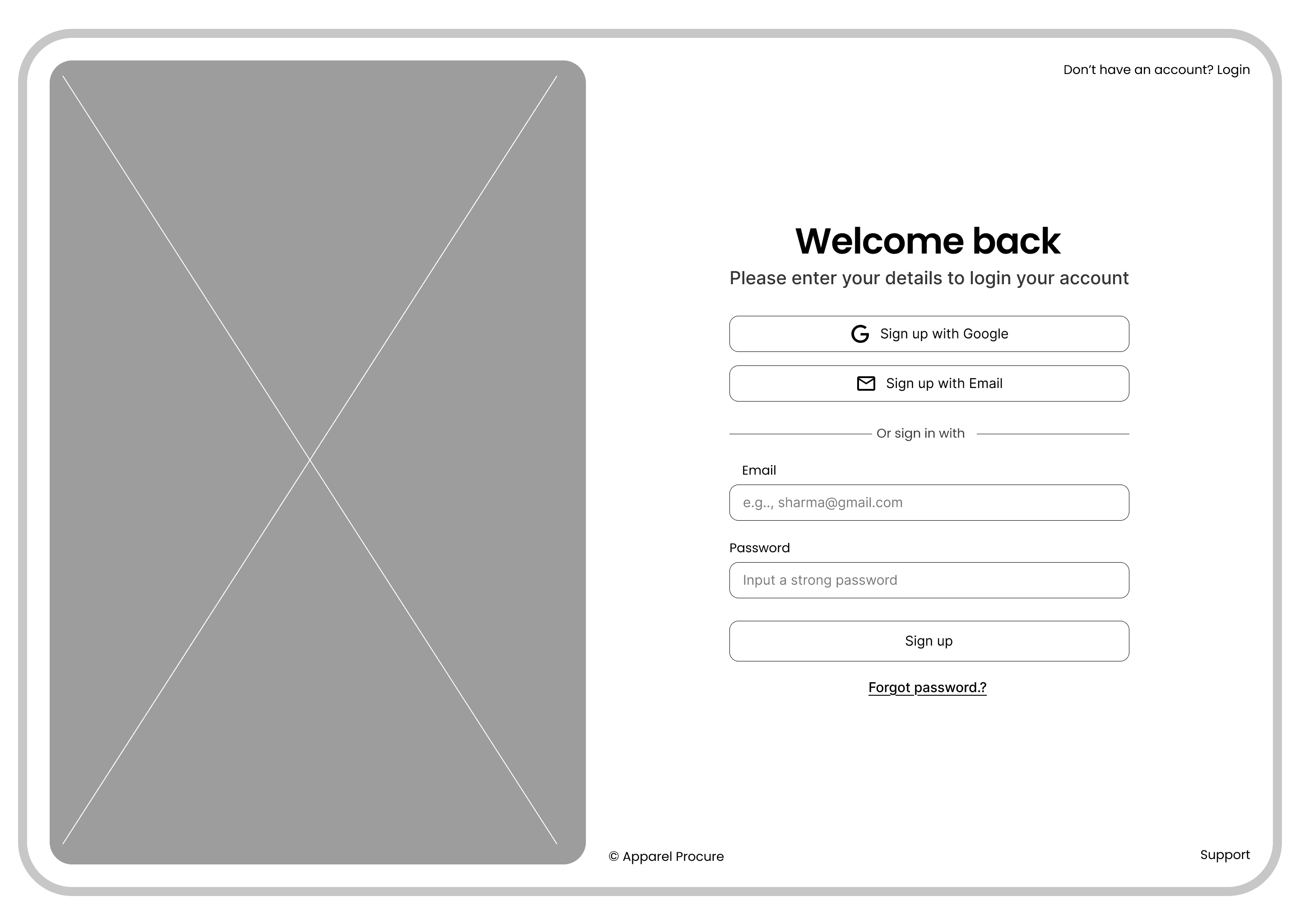
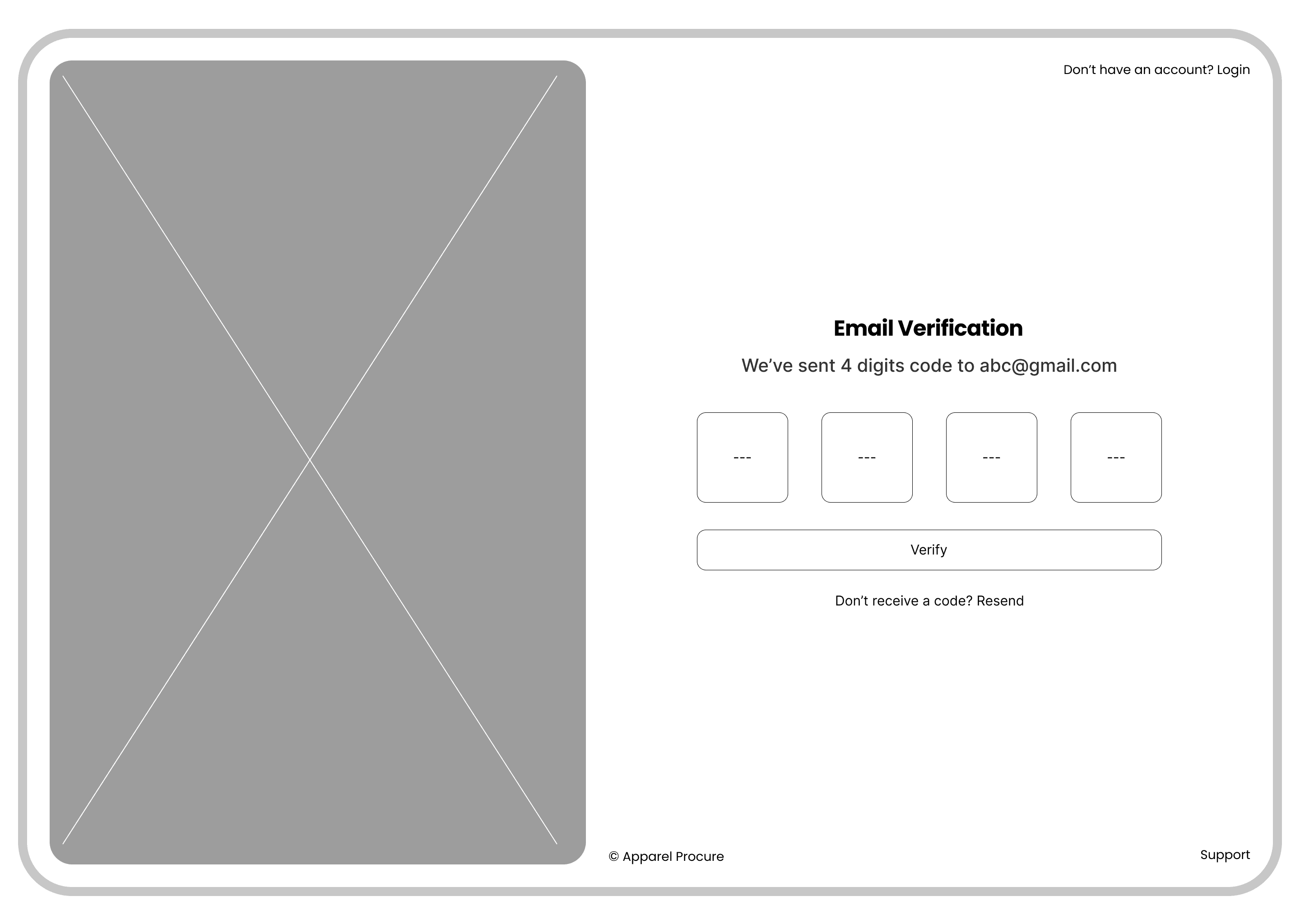
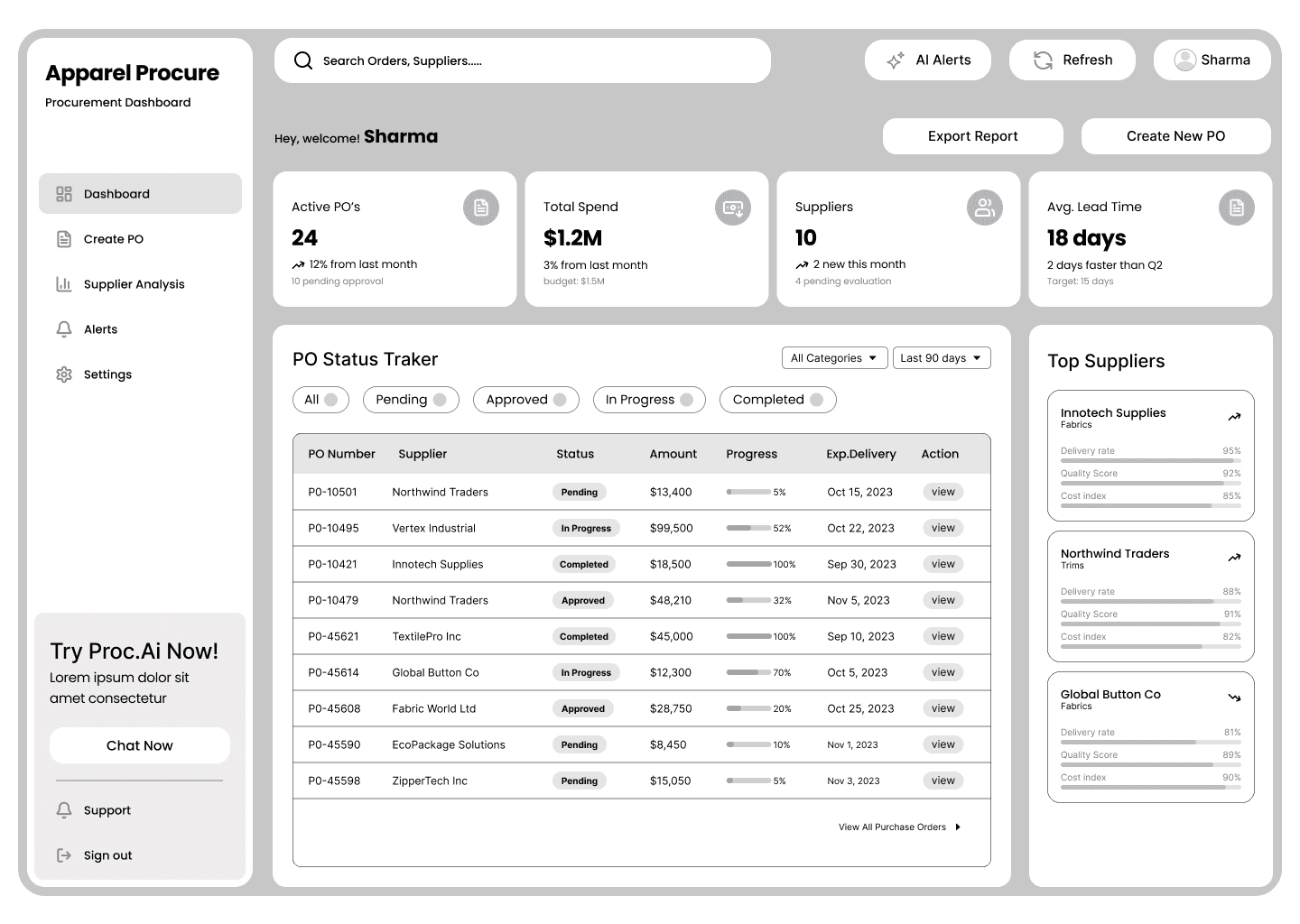
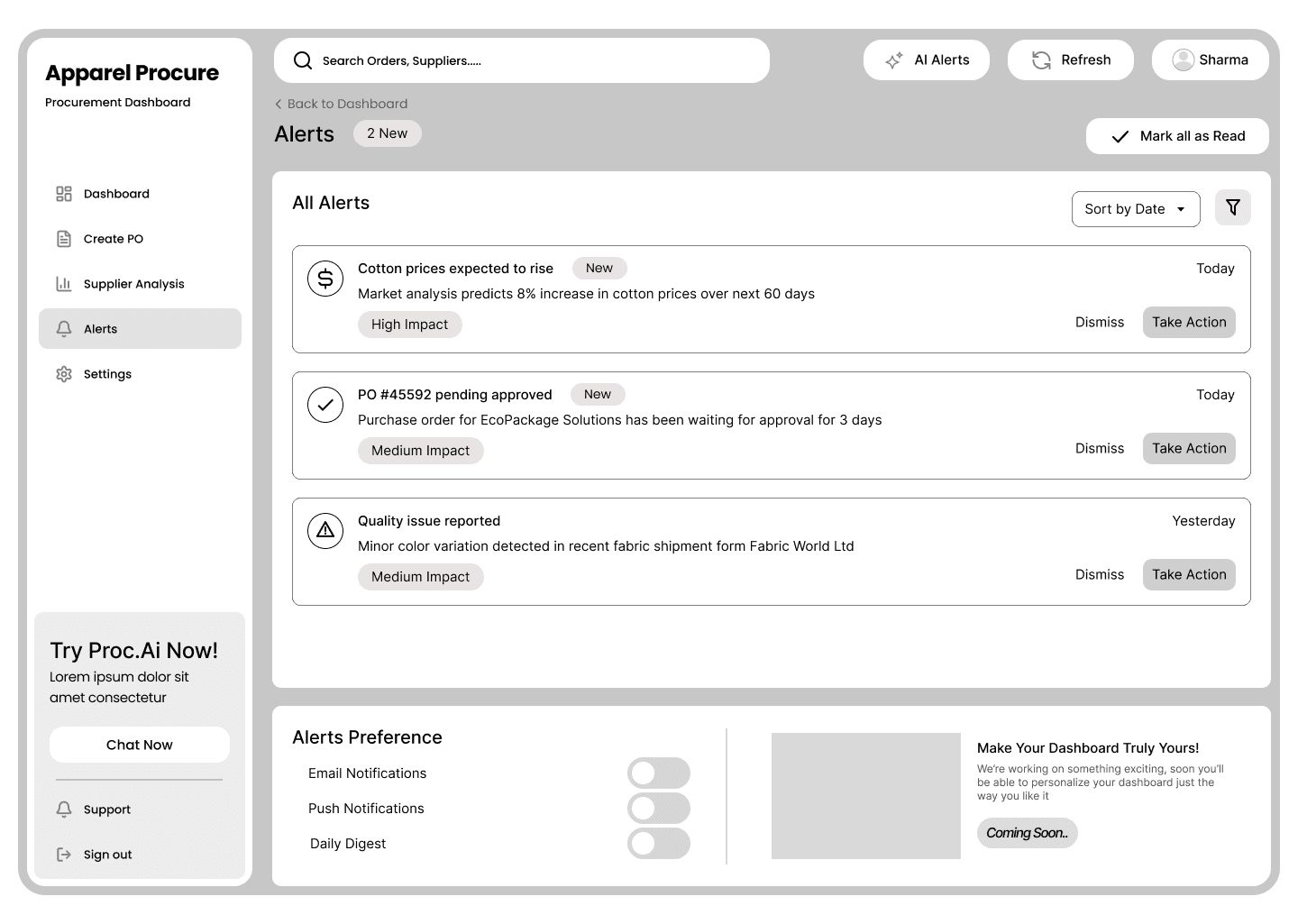
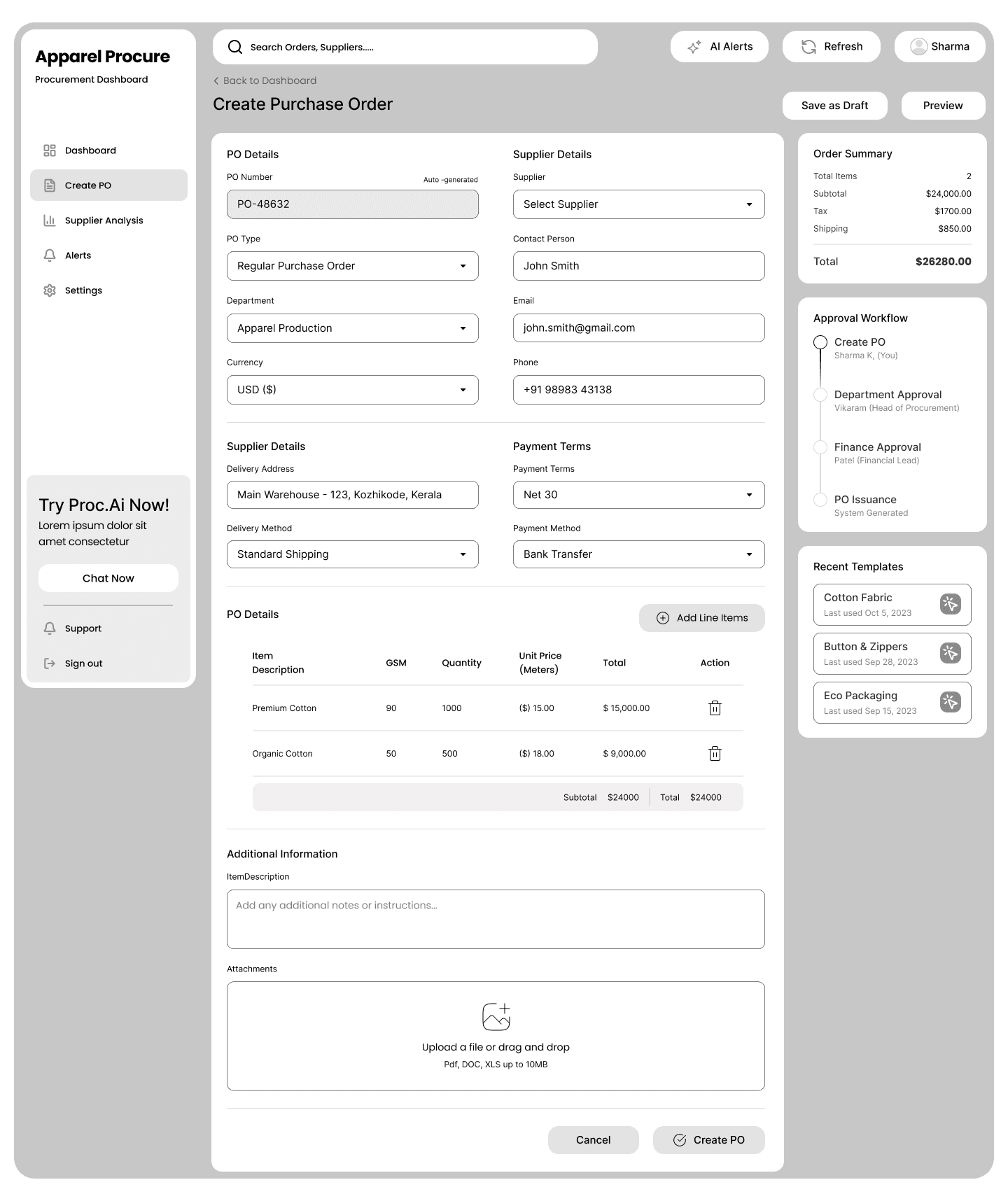
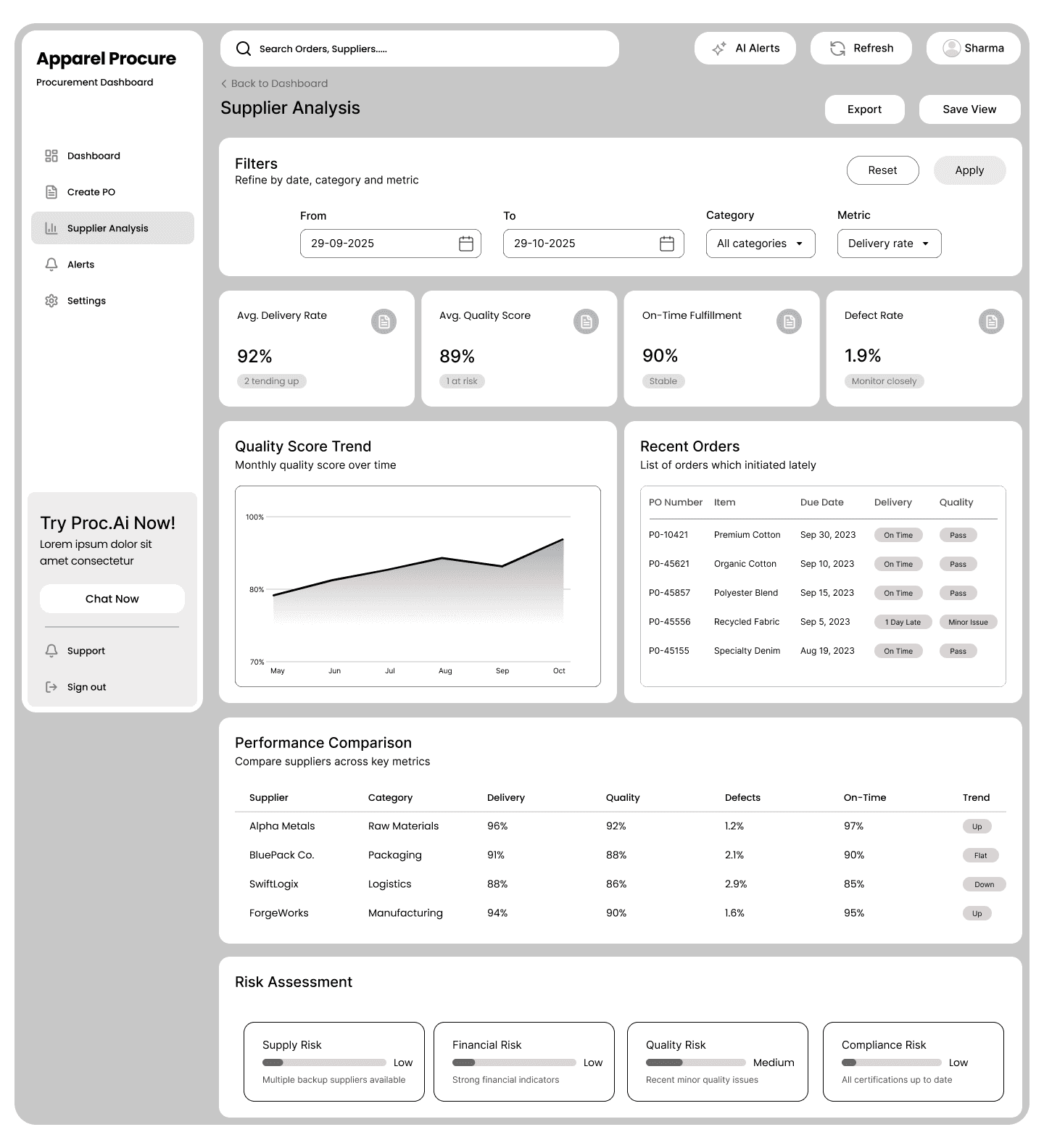
This design system brings consistency and polish to the dashboard with clean typography for easy data reading, a professional color palette to highlight key details, intuitive icons for quick actions, and reusable components like cards and charts for a smooth layout. Built in Figma, this setup creates a unified interface that
makes procurement tasks faster and more efficient for the user
Typography
Poppins
H1
Title-1
Para-1
Para-2
Para-3
Para-4
Title-2
Title-3
Title-4
Title-5
H2
H3
Icons

Colors
Orangey Red
#ED472B
Pastel Orange
#FD9D49
Grape fruit
#E23C20
Pastel Orange
#FD9D49
White
#FFFFFF
Night
#080808
Antique White
#F3ECDC
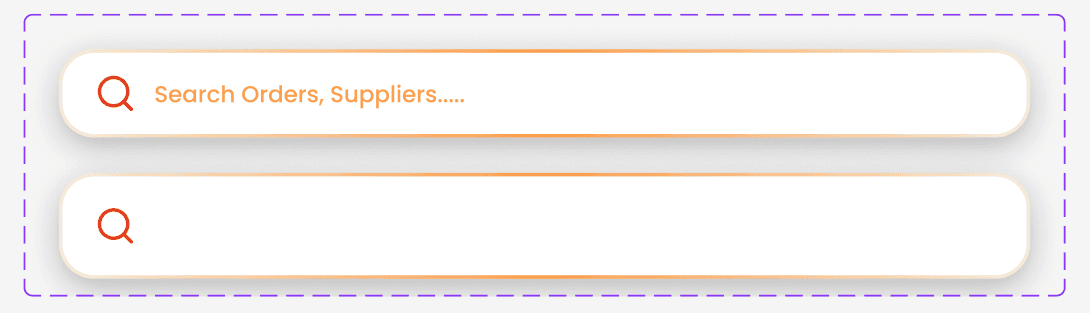
Components
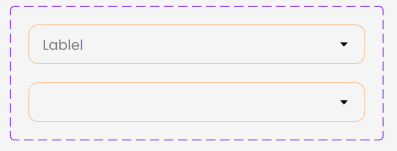
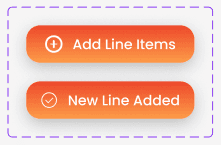

Card Prioritization
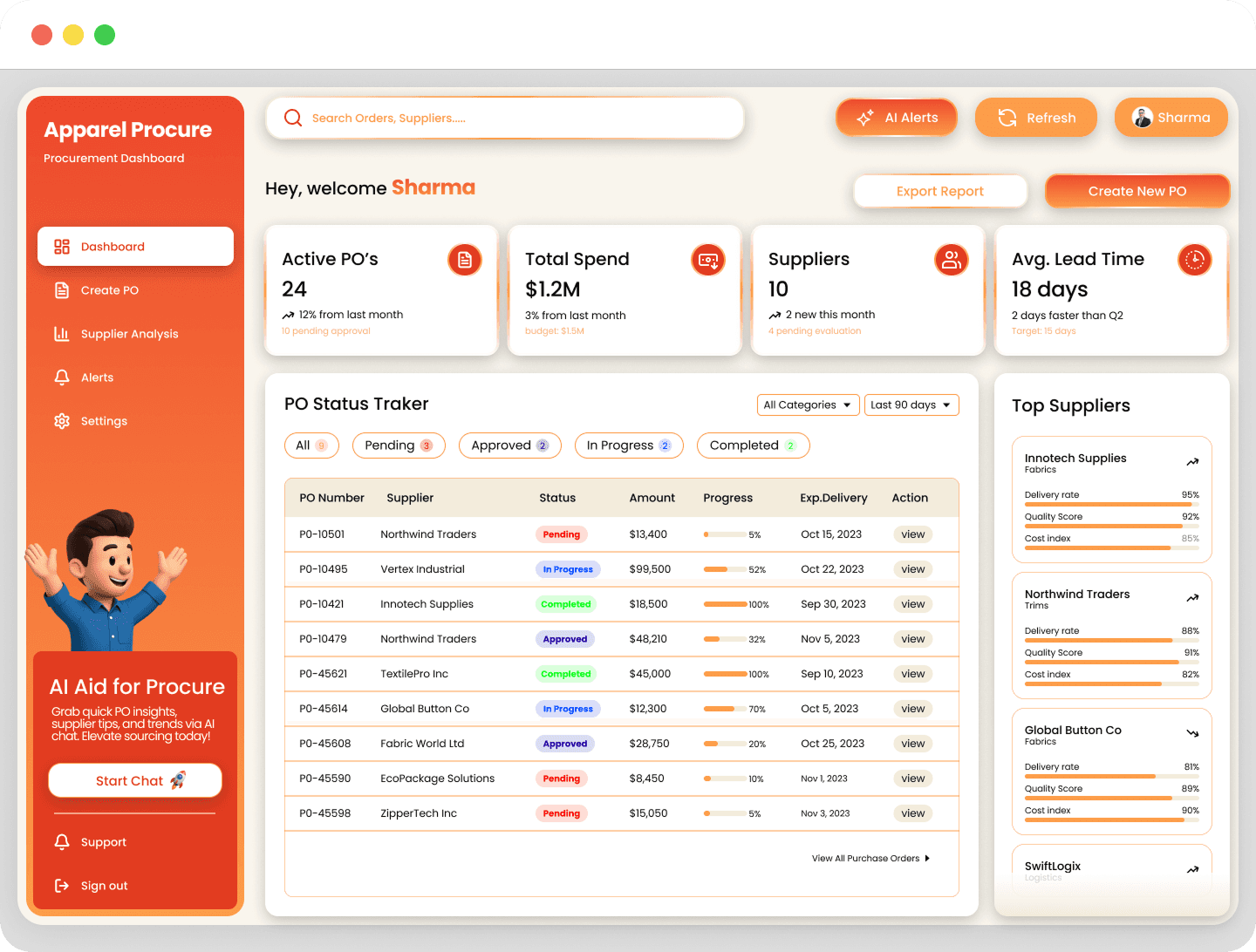
Split cards into active POs, total spend, suppliers, and avg. lead time, highlighting key numbers for instant insights. Placing cards in the main view shows metrics like "25 Active POs" ,"$1M Spend," and etc., enabling 5-second scans. This cuts decision time by 30%, addressing fragmented workflows and overload from emails/spreadsheets
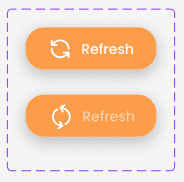
Accessible CTAs
High-contrast CTAs for buttons and links reduce latency in actions. Using high contrast and drop shadow for CTA's ensures fast clicks on approvals, making interactions seamless. This improves accessibility and speeds processes by 20%, vital for urgent procurement tasks
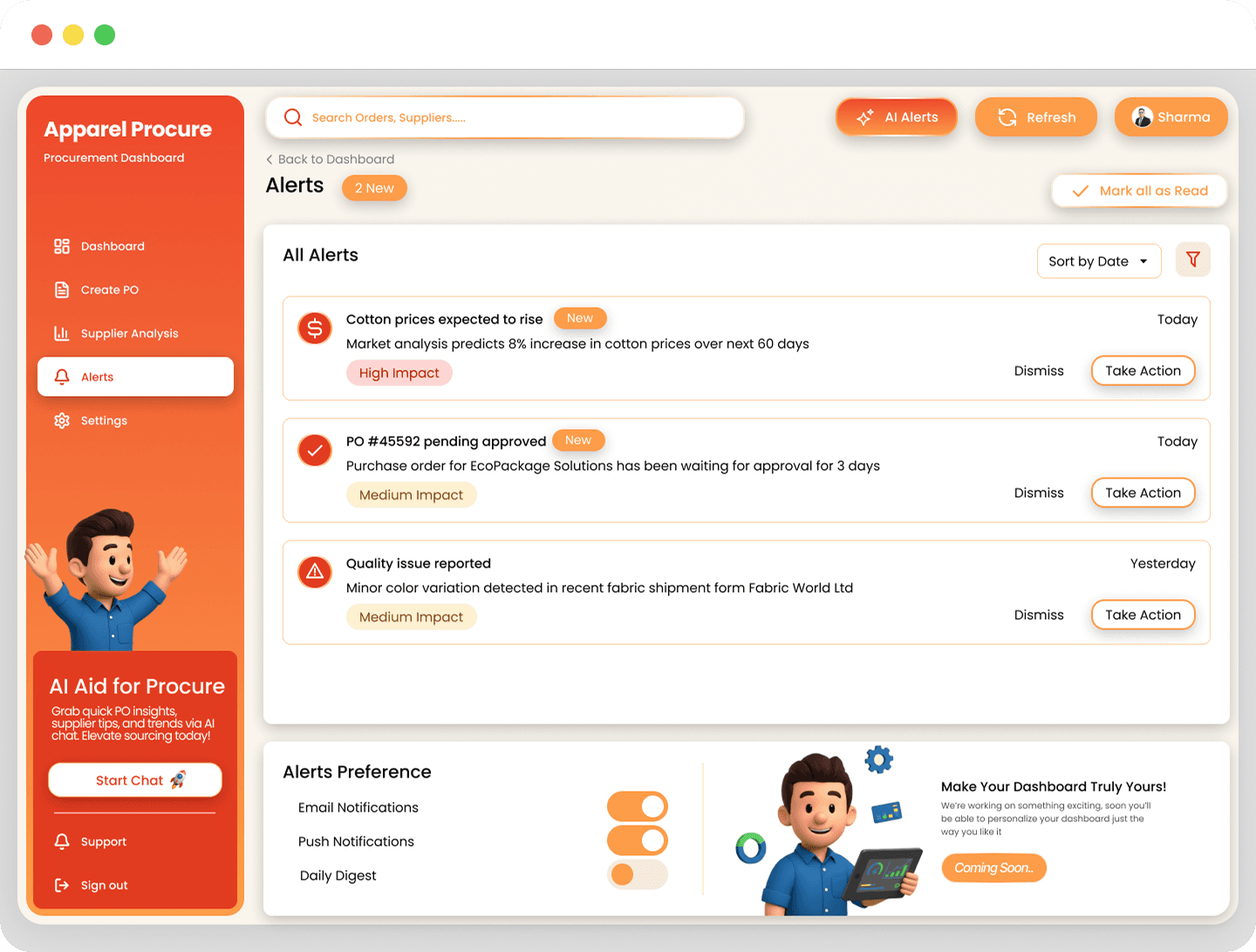
AI Predictive Alerts
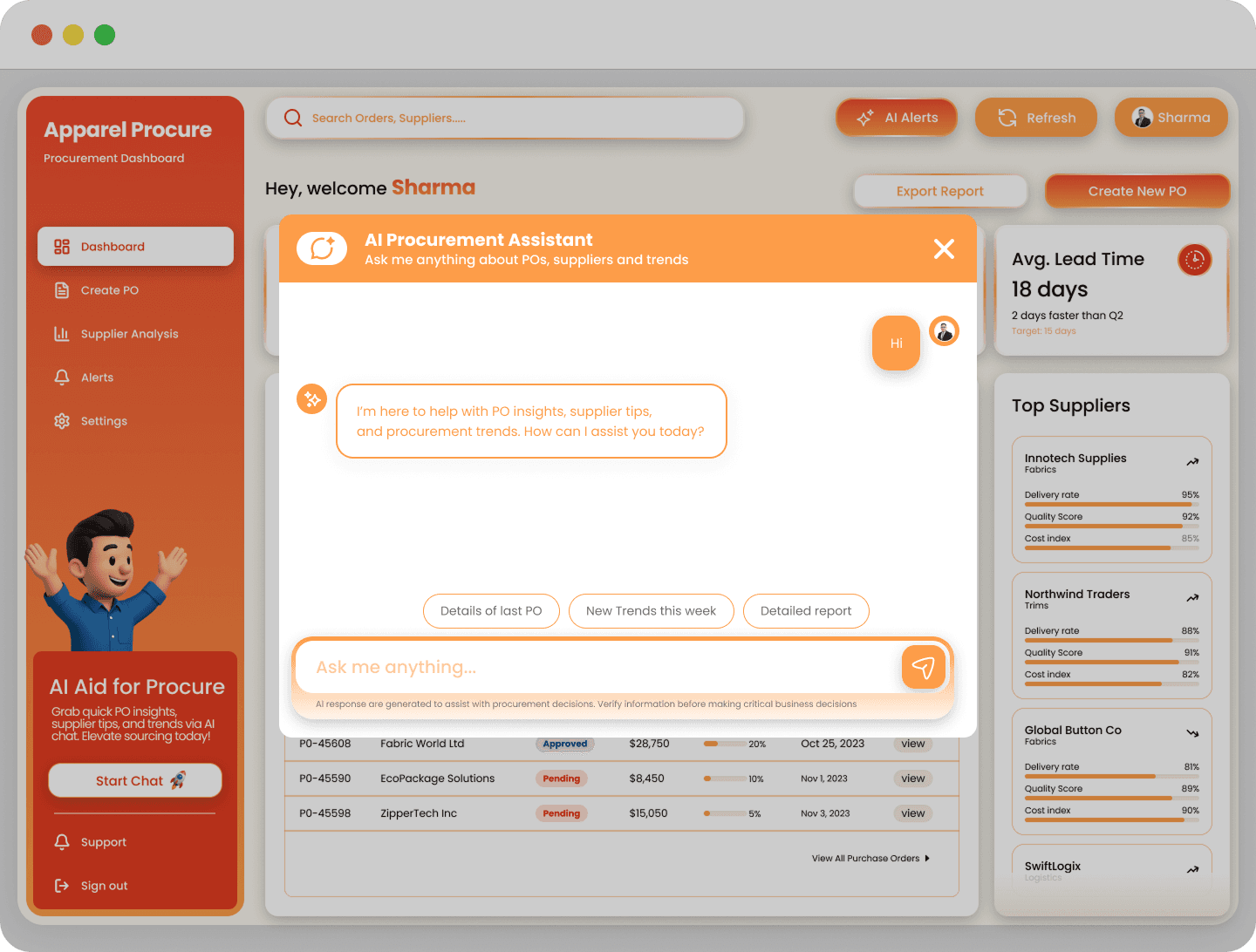
AI alerts forecast seasonal demands using last year's data. Analyzing patterns to predict 80% of needs, they trigger notifications like "Low stock for Q4 fabrics—reorder now." This prevents 89% peak delays, turning reactive firefighting into planned efficiency
PO Tracker Table
Detailed PO tracker table in main dashboard for action and tracking. Showing 10-15 rows with status, supplier, and dates, it's clickable for more details, centralizing real-time updates. This solves 2-3 week cycles by replacing 48-72 hour lags
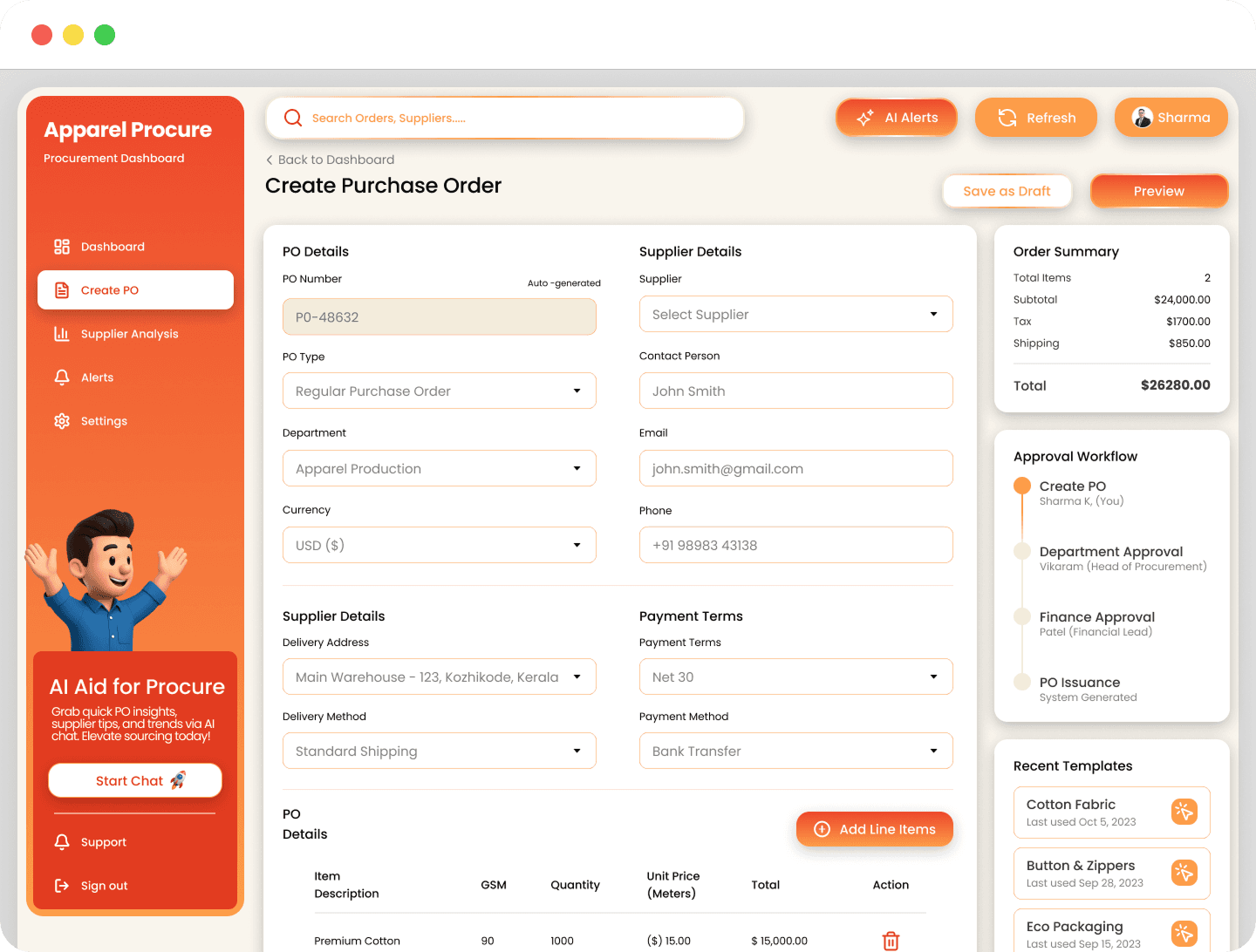
Recent PO Templates
Framed recent PO Templates in PO creation screen to save time. Listing 2-3 templates for one-click loading and editing, it streamlines repetitive setups. This reduces creation from 10 minutes to 2, minimizing errors in high-volume tasks
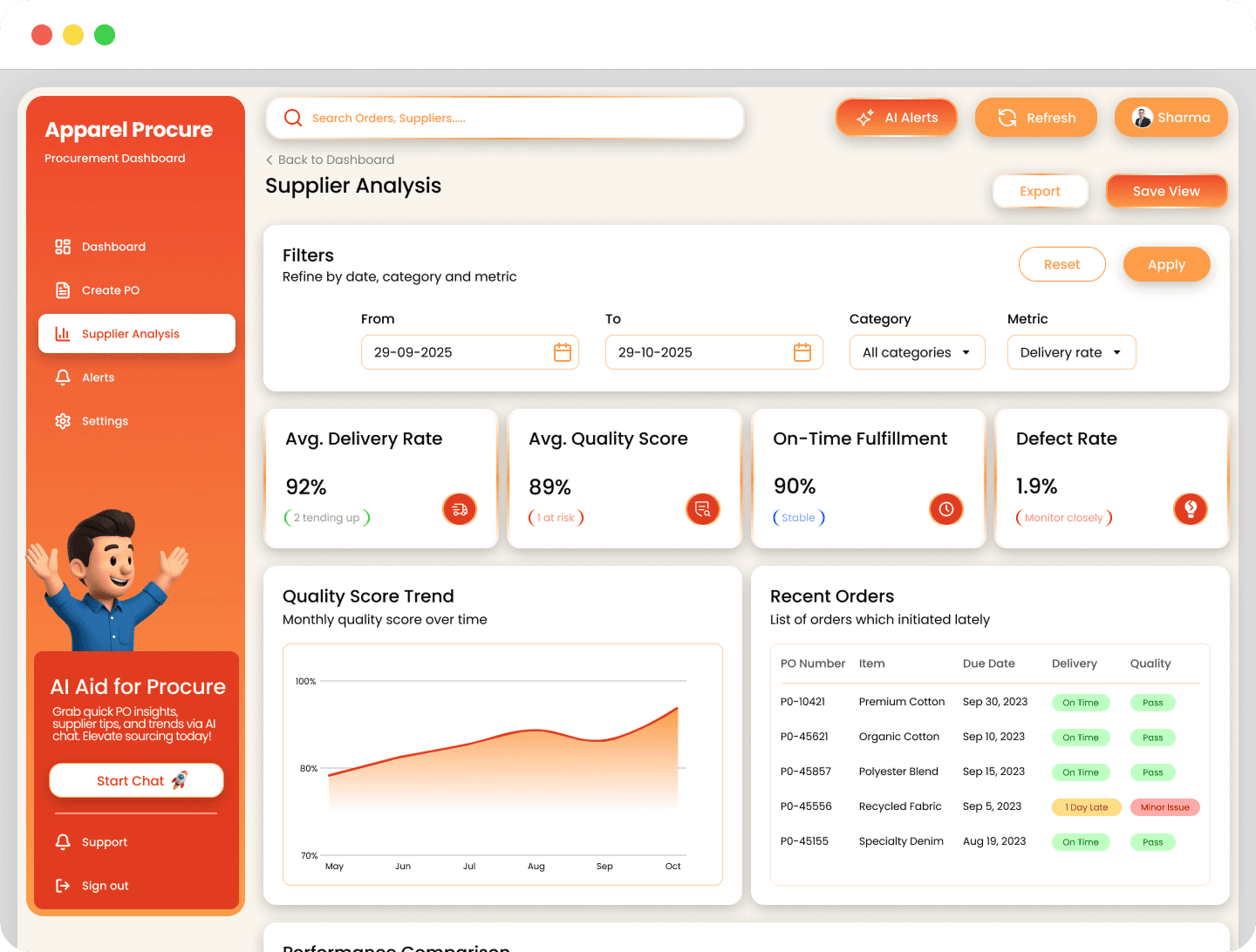
Date Filters for Suppliers
Custom date-based filters for supplier analysis. Selecting a specific timeline from calendar for view metrics, it enables targeted reviews. This improves accuracy by 25% in seasonal assessments, focusing on relevant data without sifting history
Key Design Decisions
The dashboard's design choices focus on speed, clarity, and accessibility to solve procurement pains like
delays and poor visibility. Each decision prioritizes quick actions and data trust,
making the tool intuitive for users in fast apparel cycles.
Final Design

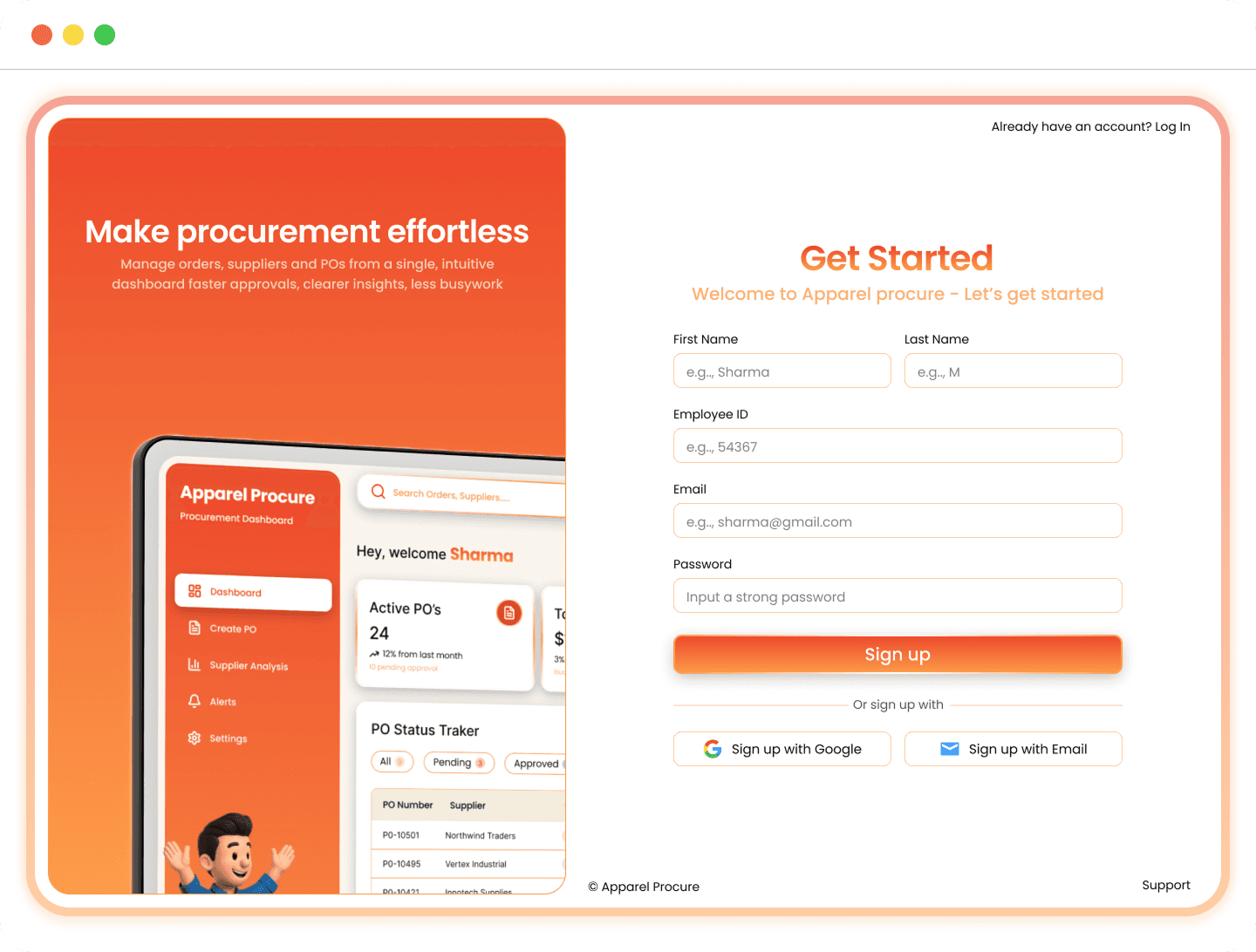
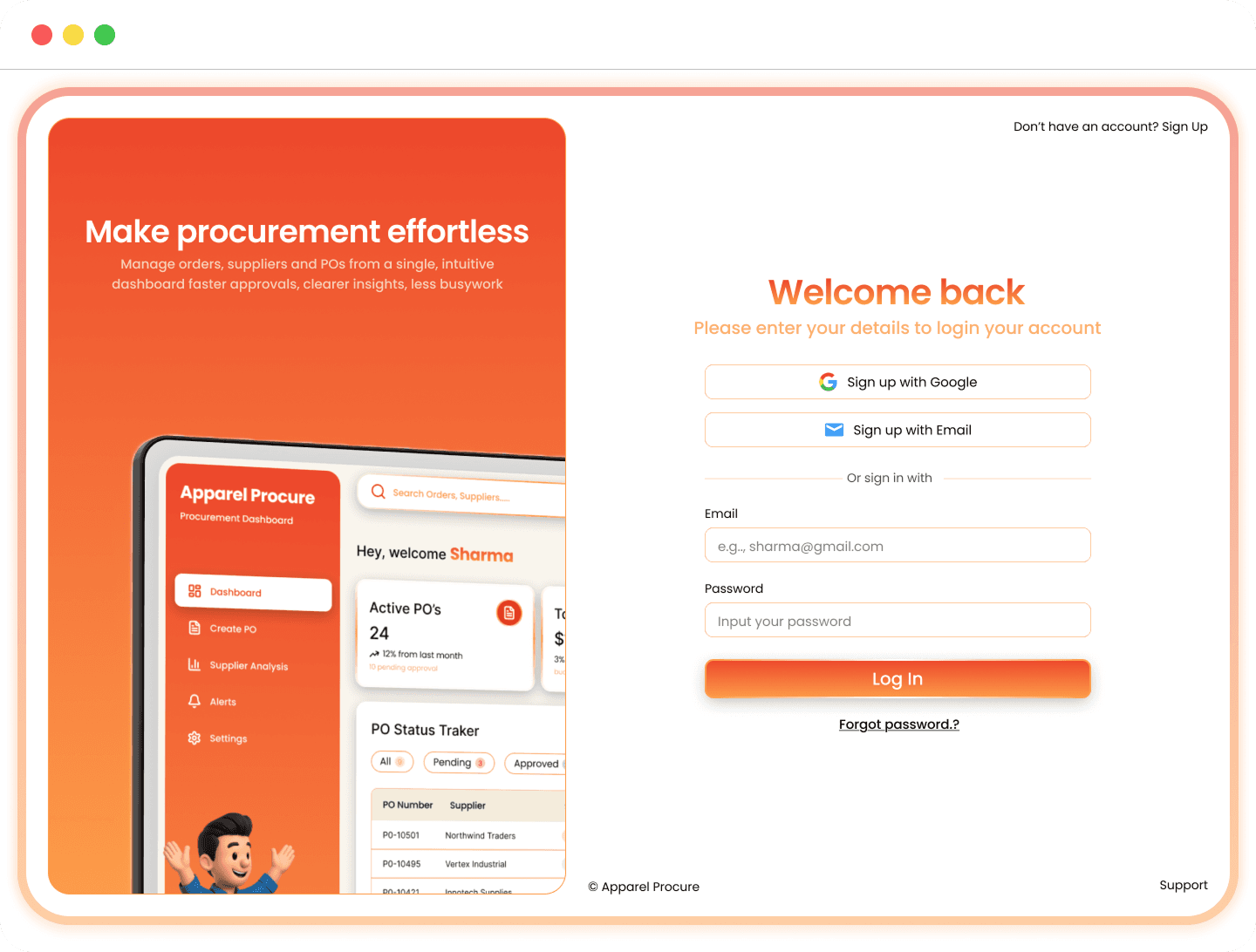
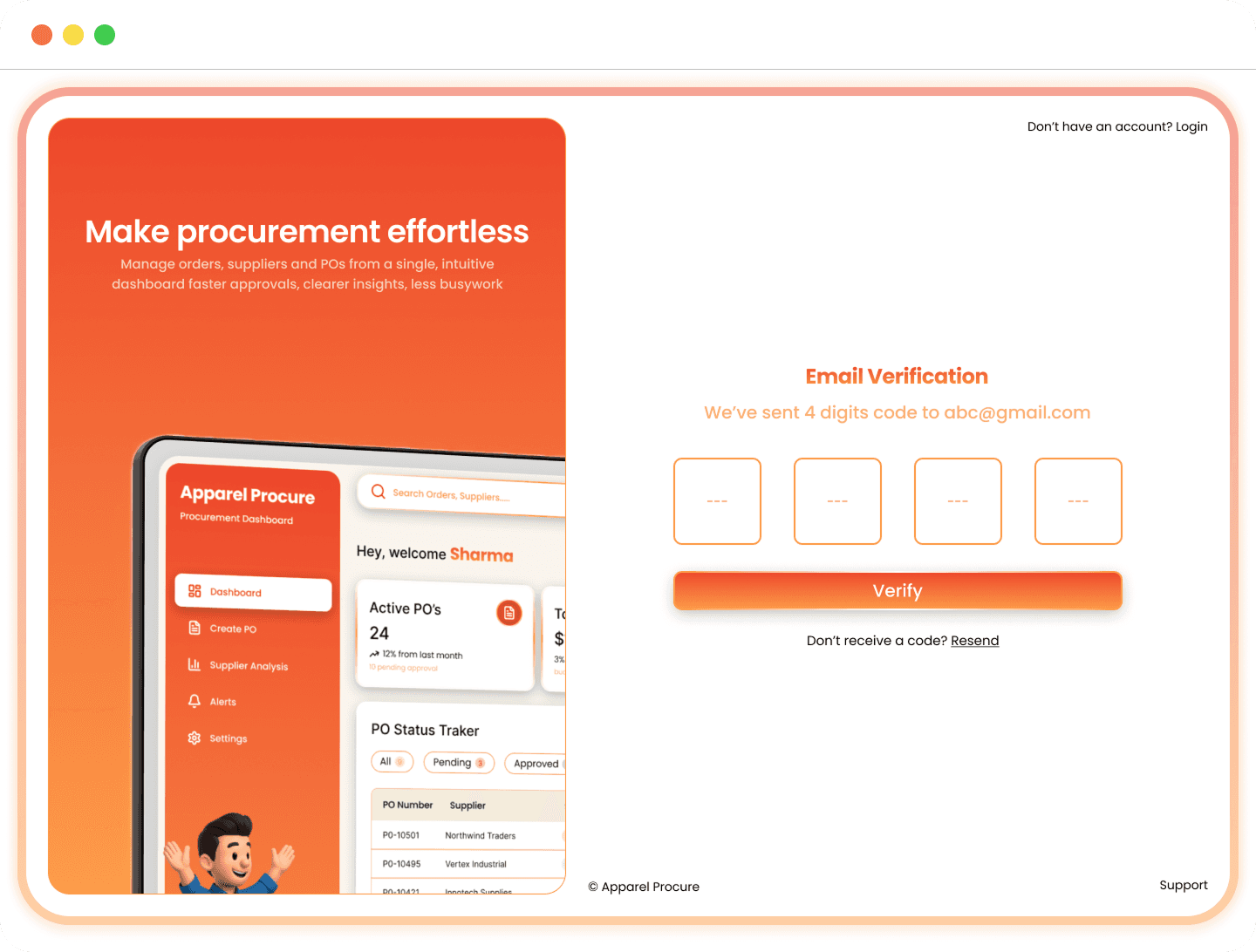
On-boarding
On-boarding
On-boarding
On-boarding
On-boarding
On-boarding
Dashboard
Dashboard
Dashboard
Dashboard
Dashboard
Dashboard
Projected Impact
Faster Approvals & Decisions
From 14 days approvals to 5-7 days (50-65%) and 2 hours decisions to 45 minutes (62%). Automated workflows and real-time alerts replace emails, speeding sourcing in seasonal cycles
Streamlined Supplier Research
From 5 days to 2 days (60% improvement). AI predictions and date filters simplify analysis, cutting time amid sustainability demands for quick, informed choices
Reduced Budget Variance
From 20% to 5% with live tracking. Visual alerts prevent overspend, keeping budgets aligned and avoiding surprises in volatile apparel markets
Lower Emergency Costs
40% reduction via predictive planning. AI alerts forecast needs, eliminating rushed buys and last-minute expenses during peak seasons
Efficient Compliance & Audits
80% audit time cut with automated docs. Centralized logs and real-time dashboards minimize manual efforts, ensuring seamless compliance checks
Fewer Errors & Emails
60% fewer emails and 45% error reduction; 100% spreadsheet elimination. Intuitive templates and notifications free inboxes, boost accuracy in high-volume tasks
Reflections & Learnings
Learned to use spacings strategically, making UI visually clean and accessible, improving readability in dashboards
Hierarchy beats
completeness, users want quick answers, not data overload in fast apparel cycles
Context Over Beauty
Beautiful charts mean nothing without business context, every visualization needed to answer 'so what?'
Understood how thoughtful designs drive real impact in B2B, turning complex problems into simple, effective solutions
Future Opportunities
Customized Roles
Tailored dashboards for financial managers
suppliers, enabling role-specific insights and collaboration
Blockchain Integration
Real-time supply chain tracking and verification, ensuring transparency from fabric to delivery
IoT Integration
Connect with sensors for live inventory tracking, preventing stockouts in real-time
AI-Powered Negotiations
Automated suggestions for supplier talks, using data to recommend better terms and save costs